A Biased View of Permian Basin Pipeline Construction
Table of ContentsThe Only Guide for Permian Basin Pipeline ConstructionWhat Does Permian Basin Pipeline Construction Mean?How Permian Basin Pipeline Construction can Save You Time, Stress, and Money.Permian Basin Pipeline Construction - The FactsAll about Permian Basin Pipeline ConstructionAll about Permian Basin Pipeline ConstructionThe Buzz on Permian Basin Pipeline Construction
Cured-in-place pipe (CIPP) is a trenchless modern technology used to set up water, sewage system, and other pipes without calling for major excavation or intrusive excavating. The procedure begins by putting a lining into the existing pipework, which is then full of resin that hardens to develop a permanent pipe within the existing pipe.At MaxLiner United States, we comprehend the benefits of making use of CIPP, that include its cost, speed, and marginal interruption during installment. This makes it an optimal selection for professionals, plumbing professionals, companies, and communities aiming to minimize downtime while installing new pipes. One of the primary advantages of CIPP is its price financial savings on labor and tools, causing a more economical service than standard pipeline substitute techniques.
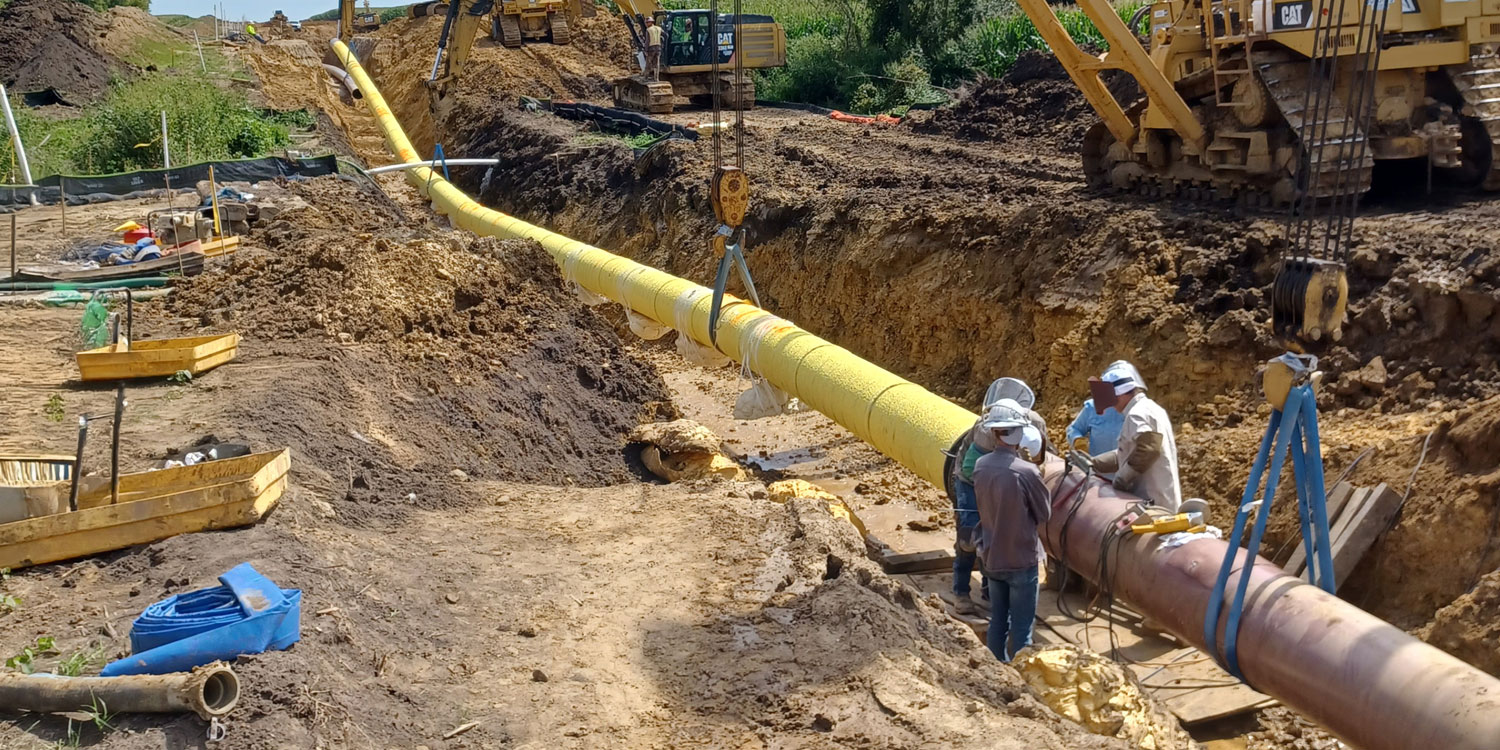
Instead, a liner is inserted right into the busted pipe and healed in place with warmth, creating a seamless repair that gives long-term security versus origin infiltration, corrosion, opening damages, and various other usual issues with existing pipelines. Not just does this strategy eliminate the requirement for extensive excavating, but it likewise gets rid of the possible threats related to harmful waste elimination.
Unknown Facts About Permian Basin Pipeline Construction
Therefore, expenses often tend to be less than replacing whole sizes of piping via open-cut setups also when factoring in the expense of liner materials. Due to its low environmental effect and cost financial savings potential, cured-in-place pipe installment is coming to be increasingly preferred as a choice to standard repair in various sectors.
When it involves cured-in-place pipeline (CIPP) setup, many advantages originate from its very little time and cost. CIPP installations can be established up in a fraction of the time it would certainly take for standard pipe substitute since no excavation is required. As opposed to excavating right into the bordering soil and getting rid of existing pipelines, CIPP makes use of cutting edge trenchless technology to install resin linings or polyester fiber tubes inside existing pipelines
Getting The Permian Basin Pipeline Construction To Work
This helps to reduce downtime and keep your job on track, causing time cost savings that would not have been feasible with typical pipeline substitute systems. Whether getting rid of smaller sized sections of piping or performing full relining projects, this method has certain benefits when it concerns expenditure. Not only is devices rental removed considering that no excavation is needed, yet so are site reconstruction prices given that a marginal surface repair might be needed after installment.
As a result, with marginal time and price required for installation, cured-in-place pipe installation is a fantastic alternative for cutting down on labor expenses without compromising quality job. As we'll discuss in the complying with section, this sort of setup uses substantial advantages when it involves lessening disruption around homes and businesses.
Getting My Permian Basin Pipeline Construction To Work
This trenchless installment is a lot easier to execute than conventional pipe laying. As the name implies, many excavation and relevant website preparation is avoided because the brand-new pipelines are fed with existing channels. This makes it possible to install underground pipelines in a fraction of the time required for the extra standard digging approach, which can create unnecessary disturbance to the atmosphere, local roadways, pathways, adjacent homeowner, etc.
Sometimes, it may take a little bit of digging if these access points are not already set up in existing upkeep holes or catch containers. The result ought to still be less disruptive than excavating lengthy trenches, but find out here now something to think about prior to committing to this setup (Permian Basin Pipeline Construction). In general, cured-in-place pipe setup is viable when very little interruption is wanted since most of the underground facilities remains undamaged while giving renewed strength and dependability to existing pipelines


The cured-in-place installation process starts with checking the pipe in question to determine whether any type of damages exists or requires replacement. Later, if essential, cleansing has to take location inside the pipe to make sure that all material build-up is eliminated and all surfaces are smooth and unpolluted before lining installment. As soon as these steps are finished, a special resin-coated really felt or crossbreed really felt and fiberglass material is placed into the pipeline and uniformly dispersed along its size.
Everything about Permian Basin Pipeline Construction
Curing (either ambient, warmed water or air, or UV) is introduced into television when the lining installment is full, curing and forming the material material around the old pipe's shape. It must be kept in mind that too much pressure needs to be prevented whatsoever costs because it can create further damage to the system.
This comprehensive section regarding the 'Cured-In-Place Installation Refine' has explained its detailed treatment. By recognizing what goes into this process and its problems, we can value exactly how beneficial it can be for several piping fixings - Permian Basin Pipeline Construction. Now allow us carry on to explore what kinds of products are made use of in this procedure in our following section
Some Known Facts About Permian Basin Pipeline Construction.
The appropriate product can substantially influence the task, consisting of cost-effectiveness, resilience, efficiency, and effectiveness. Polymer linings are commonly chosen for CIPP since they are very long lasting and resistant to rust and damage. They can likewise last anywhere from 10 to thirty years, depending on recommended you read the top quality of the products made use of.
It is often much easier, much less disruptive, and more cost-efficient than conventional repair services. One of the primary advantages of CIPP pipe installment compared to the conventional technique of reducing out and replacing any kind of broken pipe areas with new material is that CIPP pipe does not call for digging or digging deep into the bordering areas.
This reduces the moment and labor needed for complicated repair tasks. Finally, CIPP materials are thinner than sections of the new pipe, so they need extremely little space while supplying remarkable long life and sturdiness compared to other approaches of repairing damaged pipelines. While CIPP installation supplies some unique benefits over conventional approaches of fixing pipes, it can have particular limitations relying on which type of details circumstance needs it.
Fascination About Permian Basin Pipeline Construction
Overall, CIPP pipeline installment presents several benefits when it pertains to conserving time, money, and effort during pipe fixing tasks. These benefits make it an attractive alternative for those trying to find quick yet reputable means to attend to damaged pipes in your home or in company setups. In the following area, we will certainly discuss a summary of cured-in-place pipe installation in greater detail to provide you an also far better understanding of its many benefits.